This Is Why Valparaiso’s Street Festivals Are a Photographer’s Dream
You know that feeling when a city just pulses with color and rhythm? Valparaiso, Chile, hits different—especially during festival season. I’m talking walls that breathe art, streets turned into stages, and light bouncing off every cobblestone. As a photographer, I never expected to find such raw, unfiltered energy. This isn’t just sightseeing—it’s capturing culture in motion. And trust me, some spots make your camera work overtime. From the echoing beats of Andean drums to the flicker of lanterns along steep hillside paths, Valparaiso doesn’t just celebrate life—it shouts it from its rooftops. These festivals are not performances for tourists; they are expressions of community, resilience, and artistic freedom. Every corner reveals a new frame waiting to be taken, a moment pulsing with authenticity. Whether you’re drawn to vibrant murals, spontaneous dance circles, or the quiet dignity of local traditions, Valparaiso offers a visual feast unlike any other. This is where photography becomes more than a craft—it becomes a conversation with a city that refuses to be silent.
The Soul of Valparaiso: Where Culture Meets Chaos
Valparaiso is not a city that reveals itself all at once. Nestled along the Pacific coast, it unfolds in layers—hills rising like steps toward the sky, colorful homes clinging to steep inclines, and a network of historic funiculars creaking their way through time. Known as a UNESCO World Heritage site, Valparaiso has long been a haven for artists, poets, and free thinkers. Its bohemian spirit is not curated for postcards; it lives in the graffiti-laden alleyways, the impromptu guitar serenades, and the scent of empanadas drifting from open windows. This artistic heartbeat reaches its crescendo during festival season, when the entire city seems to exhale in celebration. Events like the Fiesta de la Ciudad and Año Nuevo transform Valparaiso into a living stage, where music spills from every plaza and dance erupts on cobblestone corners.
What sets Valparaiso’s festivals apart is their organic nature. Unlike staged cultural exhibitions, these gatherings are rooted in community identity. Families gather on hillside patios, neighbors share homemade wine, and local groups perform traditional dances passed down through generations. The rhythm of the cueca, Chile’s national dance, mingles with Afro-Peruvian beats and contemporary street music, creating a sonic tapestry as diverse as the city’s architecture. For photographers, this means endless opportunities to document real, unscripted moments. A child laughing during a parade, an elder adjusting a folkloric hat, a couple swaying to music under string lights—these are not poses; they are life unfolding in real time.
The city’s topography adds another dimension to the experience. Because Valparaiso is built on 42 hills, festivals often take place on uneven terrain, creating dynamic visual compositions. A parade might wind down a narrow staircase, with crowds leaning over wrought-iron balconies to catch a glimpse. This verticality forces photographers to think in layers—foreground, midground, background—all within a single frame. The interplay of light and shadow across the hills changes by the hour, offering fresh perspectives from dawn to dusk. Understanding this rhythm is key to capturing the soul of the celebration. It’s not enough to point and shoot; one must move with the city, anticipate its breath, and respect its pulse.
Cerro Bellavista: The Open-Air Canvas
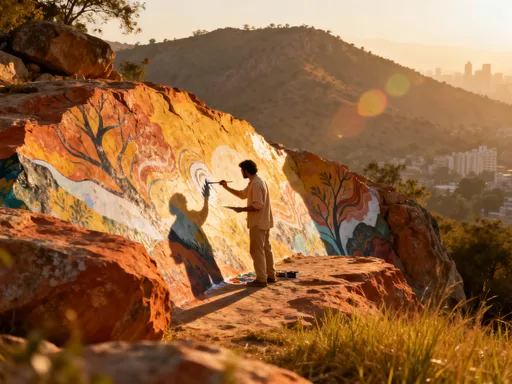
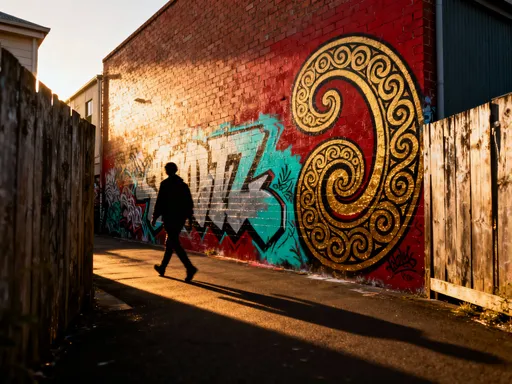
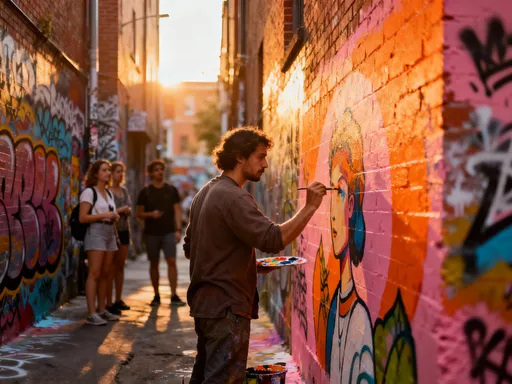
If Valparaiso is a living gallery, Cerro Bellavista is its centerpiece. This hillside neighborhood is renowned for its expansive murals, bold graffiti, and ever-evolving street art. During festival season, the art doesn’t just stay on the walls—it comes alive. Local artists set up easels in public squares, painting in real time as crowds gather to watch. Performers in elaborate costumes move through the streets like human sculptures, their faces painted in symbolic designs. The entire hill becomes a stage for creativity, where every surface—walls, stairs, even manhole covers—feels like part of the exhibition.
For photographers, Cerro Bellavista offers some of the most compelling visual opportunities in the city. Wide-angle lenses capture the sweeping vistas of painted facades against the backdrop of the Pacific Ocean. The contrast between vibrant colors and weathered stucco tells a story of decay and rebirth, a theme central to Valparaiso’s identity. During nighttime parades, the area transforms again. Strings of lanterns illuminate staircases, and the glow of flashlights and phone lights from the crowd adds a dynamic, almost ethereal quality to the scene. Paseo Atkinson, a narrow walkway lined with art studios and cafes, becomes a hotspot for candid photography. Here, you can capture artists mid-brushstroke, children marveling at a mural, or couples posing in front of a giant painted phoenix rising from the rubble.
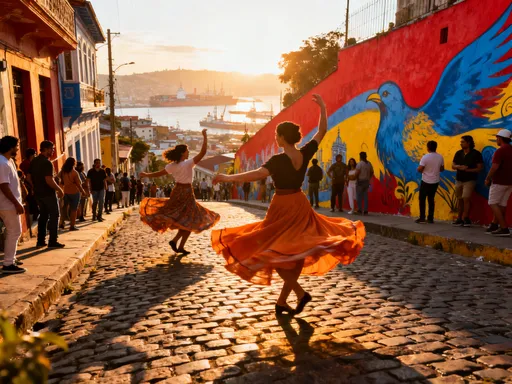
Timing is crucial when photographing Cerro Bellavista during festivals. Early evening, just after sunset, offers the best balance of ambient light and artificial glow. The blue hour enhances the saturation of colors without washing them out. As darkness deepens, long exposures can capture the movement of performers, turning swirling skirts and raised arms into elegant blurs of motion. Tripods are useful but often impractical in crowded areas, so mastering handheld stability is essential. Image stabilization, high ISO performance, and fast shutter speeds become your allies. The key is to remain mobile, ready to shift position as the action unfolds. One moment, a samba troupe might be dancing near a graffiti-covered wall; the next, they’ve turned a corner, and you must be ready to follow.
Plaza Sotomayor & the Port Pulse
No festival in Valparaiso feels complete without a visit to Plaza Sotomayor, the city’s central square and symbolic heart. Anchored by the striking Monument to the Heroes of Iquique, this grand plaza connects the historic hills with the bustling port below. During celebrations, it becomes a convergence point for tradition and modernity. Naval bands in crisp uniforms march in tribute to Chile’s maritime heritage, while folkloric groups in colorful regional attire perform dances from across the country. Food vendors line the perimeter, offering everything from sizzling anticuchos to sweet mote con huesillo, a traditional fruit drink.
For photographers, Plaza Sotomayor offers a masterclass in contrast. The neoclassical architecture of the surrounding buildings—stone columns, arched windows, grand staircases—frames the chaos of the festival with a sense of order. The polished bronze of the monument reflects the movement around it, creating natural mirror effects. Wet pavement after an evening rain multiplies the visual impact, doubling the colors of costumes and the glow of string lights. Golden hour, just before sunset, is particularly powerful here. The low-angle sunlight bathes the plaza in warm tones, highlighting the textures of stone and the details of embroidered garments. This is the time to focus on composition—using archways as natural frames, aligning dancers with architectural lines, or capturing reflections in puddles.
The port area adjacent to the plaza adds another layer of energy. Cargo ships and fishing boats continue their work even during festivals, creating a fascinating juxtaposition. A crane might loom in the background of a folk dance performance, or a tugboat’s horn might echo during a quiet musical interlude. This blend of industrial function and cultural celebration is uniquely Valparaíso. Photographers can position themselves along the waterfront promenade to capture wide shots that include both the festivities and the working harbor. Drones are generally restricted in the area, so elevated vantage points—like the upper levels of nearby buildings or the Mirador Gervasoni—are valuable for panoramic views. The key is to remain aware of your surroundings; the plaza is busy, and safety should always come first, especially when handling equipment.
Hidden Alleys of Cerro Concepción: Intimate Frames
While the main plazas and hills draw the largest crowds, some of the most powerful photographic moments happen in the quiet corners of Cerro Concepción. This neighborhood, with its pastel-colored homes and winding staircases, is less tourist-heavy than others, making it ideal for capturing authentic, unguarded interactions. Narrow alleys like Paseo Gervasoni wind through the hillside, connecting homes, cafes, and small galleries. During festivals, these passages become intimate stages for spontaneous performances—local musicians strumming guitars, children dancing barefoot, elders sharing stories on doorsteps.
Photographing in these spaces requires a different approach. The lighting is often dim, with shadows pooling in corners and only slivers of sunlight cutting through overhead wires. This calls for fast lenses—prime lenses with wide apertures like f/1.8 or f/2.0—that can gather light efficiently. Natural light becomes your primary tool; avoid harsh flash, which can disrupt the mood and draw unwanted attention. Instead, use the ambient glow of lanterns, candles, or string lights to create warm, atmospheric images. A 35mm or 50mm lens is ideal for capturing close-up portraits without intruding on personal space. The goal is not to stage scenes but to observe and wait for moments that reveal themselves naturally.
Paseo Gervasoni, in particular, offers a scenic walk lined with flower boxes, iron railings, and photogenic doorways. During festivals, residents often decorate their homes with handmade banners, paper flowers, and small altars honoring local traditions. These personal touches add depth to your storytelling. A shot of a child peering from behind a painted door, a couple sharing a quiet moment on a balcony, or a musician tuning his guitar before joining a street ensemble—all of these moments carry emotional weight. Because these interactions are intimate, ethical considerations are paramount. Always ask for permission before photographing individuals up close, especially in residential areas. A smile, a nod, or a simple gesture can go a long way in building trust. When people feel respected, they are more likely to let their guard down, resulting in more genuine images.
Festival Timing & Local Rhythms
Timing can make or break a photographic journey through Valparaiso’s festivals. While the city hosts cultural events year-round, the most vibrant celebrations occur between October and March, when the weather is warm and daylight lasts longer. The Fiesta de la Ciudad, held every February, is one of the largest and most comprehensive, featuring parades, live music, art installations, and community workshops across multiple hills. Año Nuevo (New Year’s) is another peak moment, with fireworks over the bay, midnight toasts on rooftops, and spontaneous street parties that last until dawn.
Weekends naturally draw bigger crowds and more scheduled performances, but weekdays offer quieter moments—perfect for capturing behind-the-scenes activity. Early mornings are golden for photographers. This is when vendors set up their stalls, artists finish last-minute mural touches, and street cleaners wash down the cobblestones, creating reflective surfaces ideal for abstract compositions. By mid-afternoon, the energy builds, and by evening, the city is fully alive. Checking the municipal event calendar or visiting local cafes with posted flyers can help you stay informed about surprise performances or pop-up exhibitions. Many locals are happy to share information with respectful visitors, especially if you show genuine interest in their culture.
It’s also important to be mindful of over-tourism. While Valparaiso’s festivals are open to all, they are first and foremost for the community. Crowds can strain infrastructure and disrupt daily life, especially in narrow hillside neighborhoods. As a photographer, you have a responsibility to move thoughtfully through these spaces. Avoid blocking pathways, respect private property, and be aware of noise levels. The best images often come not from the center of the action but from the edges—where the festival meets everyday life. A woman hanging laundry while a band plays nearby, a dog sleeping through a drum circle, a shopkeeper sweeping glass after a fireworks display—these quiet contrasts tell a richer story than any headline event.
Gear & Shooting Strategies for Urban Festivity
Photographing Valparaiso’s festivals demands both technical preparedness and creative flexibility. The coastal climate is humid, and sudden rain showers are common, so protecting your gear is essential. Use weather-sealed cameras and lenses when possible, and always carry a lightweight rain cover or plastic bag as a backup. Salt air can corrode metal components over time, so wipe down equipment regularly and store it in a dry place when not in use. A small, absorbent silica pack inside your camera bag can help reduce moisture buildup.
Lens selection plays a crucial role. A versatile zoom lens, such as a 24-70mm f/2.8, is ideal for navigating tight spaces and switching between wide scenes and tighter shots. However, prime lenses—like a 35mm or 50mm—offer superior sharpness and low-light performance, making them perfect for portraits and dimly lit alleys. A telephoto lens (70-200mm) can be useful for isolating details from a distance, such as a performer’s facial expression or a detail in a mural, without intruding on the scene. Avoid bulky setups; the best festival photography happens when you’re free to move quickly and blend in.
Shooting in RAW format gives you maximum flexibility during post-processing, especially when dealing with mixed lighting conditions—neon signs, candlelight, and natural twilight all in one frame. Use manual or aperture-priority mode to maintain control over depth of field. Wide apertures (f/2.8 or lower) help isolate subjects in busy environments, while smaller apertures (f/8 or higher) keep more of a scene in focus for group shots or architectural contexts. Motion blur can be a creative tool; slowing your shutter speed during parades or dance performances turns movement into flowing lines of color. Practice panning techniques to keep a moving subject sharp while blurring the background.
Composition is just as important as gear. Look for natural frames—archways, windows, balconies—that draw the eye toward your subject. Use leading lines, like staircases or cobblestone patterns, to guide the viewer through the image. Layering elements—foreground figures, midground action, distant hills—adds depth. But perhaps the most important strategy is patience. Some of the best moments happen when you’ve waited long enough for people to forget the camera. Stay present, stay observant, and let the story unfold.
Why These Moments Matter Beyond the Lens
Capturing Valparaiso’s festivals is about more than taking beautiful pictures. It’s about preserving a culture that thrives on expression, resilience, and collective joy. This city has faced earthquakes, economic shifts, and urban challenges, yet its spirit remains unbroken. The murals speak of resistance, the music carries memory, and the festivals serve as acts of renewal. When you photograph a dancer mid-spin, a child’s wide-eyed wonder, or an artist’s hands covered in paint, you’re not just recording an event—you’re honoring a legacy.
Photography, at its best, is a form of engagement. It invites us to slow down, to look closely, to listen. In Valparaiso, that means stepping beyond the role of observer. Talk to the people in your frame. Learn the names of the dances, the meanings behind the costumes, the stories behind the murals. When you return home, your images will carry not just color and motion, but context and connection. They become more than souvenirs; they become testaments.
And perhaps that’s why so many photographers find themselves drawn back to Valparaiso, camera in hand, year after year. It’s not just the light, the angles, or the vibrant chaos. It’s the feeling that you’re part of something alive—something that pulses, shouts, dances, and paints its truth onto every wall. In a world that often feels filtered and distant, Valparaiso reminds us that culture is not something to be consumed, but something to be lived. And through the lens, we don’t just see it—we become part of it.